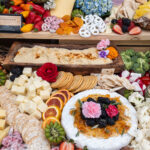
The first 30 minutes of an event set the temperature for everything that follows. Guests arrive dressed for the occasion, looking for a familiar face, a beautiful drink, and something worth gathering around. Cocktail hour catering should make that moment feel instantly generous. Rather than a small tray passed through a quiet room, it can become an abundant, artful welcome that gives guests a reason to mingle, sip, snack, and take in the celebration.
For weddings, milestone birthdays, showers, corporate gatherings, and elegant evenings at home, the best cocktail hour feels considered without feeling overmanaged. It is plentiful but not heavy, polished but still inviting. The display becomes part of the room’s design, while the menu gives every guest something to enjoy before the main event begins.
What Cocktail Hour Catering Should Do
Cocktail hour is more than the time between arrival and dinner. It solves a very real hosting challenge: people need an easy way to connect before everyone is seated, introduced, or called into the next part of the event. Food gives them that opening.
A beautifully composed grazing table or elevated appetizer display naturally creates small moments of conversation. One guest reaches for a piece of triple-cream brie, another asks about the fig spread, and suddenly a group has formed. There is no need to force an icebreaker when the food itself is a point of discovery.
The visual impact matters, too. A lavish spread of cheeses, charcuterie, seasonal fruit, crisp vegetables, artisan crackers, olives, dips, nuts, and sweets signals care before guests take their first bite. For an event with a photographer, it also creates an early visual moment while the room is full, fresh, and glowing.
That does not mean every cocktail hour needs to be enormous. A more intimate private dinner may call for a sculptural board near the bar, while a 150-person wedding benefits from a long, layered grazing installation with multiple access points. The right scale depends on the guest count, venue layout, service timeline, and whether a full meal follows.
Design the Menu Around the Moment
The most successful cocktail hour menu has contrast. Rich cheeses need bright fruit and acidic condiments. Salty cured meats need crisp crackers and fresh vegetables. Creamy dips need something substantial enough to scoop. A display should look abundant, but every element should have a purpose on the plate.
For a daytime bridal shower or graduation brunch, lighter selections often shine: fresh berries, citrus, cucumber, whipped feta, crostini, soft cheeses, and delicate sweets. An evening celebration can lean more indulgent with aged cheeses, prosciutto, salami, marinated olives, dark chocolate, dried fruit, and savory bites that pair beautifully with sparkling wine or cocktails.
It is also wise to think beyond a single flavor profile. Guests do not all gravitate toward charcuterie, and the strongest displays welcome a range of appetites. Vegetarian selections, gluten-conscious accompaniments, nut-free areas, and clearly planned alternatives for dietary restrictions help everyone participate in the experience. For larger events, separate placement can prevent guests from having to guess what works for them.
A grazing spread does not need to carry the entire menu alone. It can be paired with passed appetizers, a raw bar, mini sandwiches, warm bites, or a later dinner service. The trade-off is timing. If dinner begins more than 90 minutes after guests arrive, cocktail hour catering should be more substantial. If guests are moving quickly into a plated meal, a lighter display keeps them satisfied without spoiling their appetite.
Plan for movement, not just portions
Portion planning is only one part of the equation. Consider where people will stand, how they will move through the room, and whether the food is easy to enjoy with a cocktail in hand. A beautiful table tucked into a corner may photograph well but can create a crowd. A long display with access from both sides keeps the energy moving and helps guests serve themselves comfortably.
For outdoor Los Angeles celebrations, placement matters even more. Direct sun is unkind to cheese, chocolate, delicate fruit, and guests wearing formal attire. A shaded, well-ventilated area protects the food and makes the grazing moment more pleasant. If the event is spread across a yard, rooftop, or multiple rooms, smaller satellite boards can be more practical than one central table.
Make the Display Part of the Event Design
The food should feel like it belongs in the space, not like it arrived as an afterthought. This is where cocktail hour becomes an event feature rather than a catering line item.
A custom grazing installation can echo the colors of a floral palette, the warmth of a wood table, the playfulness of a birthday theme, or the clean sophistication of a brand event. A garden wedding might call for trailing greenery, berries, and soft pastel details. A black-tie anniversary party may feel right with dark grapes, rich tones, gold serving pieces, and dramatic layers of cheese and charcuterie.
The best styling does not sacrifice usability for looks. Guests should be able to identify what they are choosing, reach it easily, and build a satisfying bite without disturbing the entire arrangement. Professional setup makes that balance possible, using height, texture, serving tools, and intentional replenishment to keep the table inviting throughout the hour.
At Charcutisan, the goal is not simply to fill a table. It is to create an epic food experience that feels personal to the host and effortless for the people enjoying it. That may mean a sprawling charcuterie landscape for a wedding welcome or a refined, compact display for a client appreciation event.
Coordinate Food, Drinks, and the Event Timeline
Cocktail hour food and the bar should support each other. Crisp sparkling wine works naturally with briny olives, creamy cheeses, and salty crackers. A citrus-forward cocktail loves fresh fruit and herbaceous dips. Richer drinks, such as an old fashioned or espresso martini, are better alongside aged cheese, dried cherries, dark chocolate, and savory cured meats.
You do not need to create a pairing note for every item, but a little coordination makes the whole experience feel intentional. If the bar is serving spicy margaritas, include cooling and bright selections. If champagne is the star, plan for elegant bites that feel celebratory rather than overly filling.
Timing is equally important. Food should be fully styled and ready before the first guests arrive, not assembled while they are walking through the door. If family photos, a ceremony, or formal remarks happen during cocktail hour, guests need enough time to actually enjoy the spread. A 45-minute window can work for a smaller gathering, but a larger event often benefits from 60 to 90 minutes of grazing time.
For events where the host will be pulled in several directions, professional setup is a gift. It removes the pressure of arranging food, finding serving pieces, restocking napkins, and worrying whether the display still looks beautiful after the first wave of guests. Instead, the host gets to enjoy the welcome they created.
Choose Abundance With Intention
There is a difference between having a lot of food and creating a sense of abundance. The latter comes from variety, layering, color, and thoughtful placement. A table does not need duplicate ingredients in every open space. It needs a rhythm of familiar favorites, unexpected details, and enough volume to make guests feel cared for.
This is especially valuable for celebrations where people from different parts of life are meeting for the first time. At a wedding, it gives college friends, relatives, and coworkers a common place to gather. At a corporate event, it softens the formality of networking. At a birthday party, it lets guests arrive at different times without anyone feeling late to the food.
When planning, be honest about the occasion. If your guests expect dinner immediately, keep cocktail hour elegant and light. If this is the main food event, build in more substantial bites and a longer service plan. If the display is meant to be photographed, give it room to breathe and set it before the space becomes crowded. Those choices turn a pretty idea into a celebration that works.
A memorable cocktail hour does not begin with a tray. It begins with the feeling that every guest has arrived somewhere special. Give them a beautiful first bite, a place to gather, and an invitation to linger just a little longer.