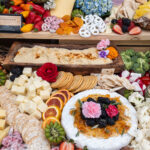
The cocktail hour is where a wedding changes shape. The ceremony is over, guests are ready to celebrate, and the room starts to fill with movement, conversation, and cameras. Wedding catering should meet that moment with more than a tray passed through the crowd. It should give people something beautiful to gather around.
A thoughtfully designed grazing table does exactly that. It welcomes early arrivals, gives the wedding party a chance to snack between photos, and creates an abundant focal point before dinner begins. With layered cheeses, cured meats, fresh fruit, dips, breads, crackers, and artful seasonal details, it feels like part of the celebration itself – not a logistical pause before the next event.
Why Wedding Catering Deserves a Bigger Role
Couples put tremendous care into flowers, fashion, lighting, music, and the flow of the evening. Food presentation belongs in that same conversation. A generous appetizer display sets the visual tone as soon as guests enter the reception or cocktail space, especially at weddings where the couple wants a polished, intimate, highly photographed atmosphere.
The best wedding food experiences do two things at once: they keep guests comfortable and create connection. A grazing table invites people to linger without requiring a formal seating moment. Guests can build a small plate, discover a favorite cheese, compare bites, and strike up conversations with relatives or friends they have just met. It is naturally social in a way that a standard appetizer station rarely is.
That matters in Los Angeles weddings, where venues can range from garden estates and private homes to rooftops, studios, and airy restaurant patios. Every setting has its own rhythm. A custom display can be styled to suit the space while still feeling full, effortless, and celebratory.
Start With the Wedding Timeline, Not Just the Menu
The right catering format depends on when guests will be eating. A grazing table set out before a 6:00 p.m. ceremony serves a different purpose than one styled for a late-afternoon cocktail hour or a daytime garden wedding.
For a ceremony followed by photographs, a display waiting at cocktail hour is often ideal. It gives guests an immediate welcome while the newlyweds finish portraits, and it prevents the familiar lull when everyone is hungry but dinner has not started. If the reception dinner begins later than planned, a well-stocked grazing spread offers a gracious buffer.
For brunch weddings, lighter elements can take center stage: seasonal berries, citrus, yogurt-based dips, pastries, mini bagels, smoked salmon, and fresh vegetables alongside cheeses and charcuterie. Evening celebrations may call for richer selections, deeper-colored fruit, marinated olives, savory spreads, honeycomb, dark chocolate, and a more dramatic presentation.
The important question is not simply, What do we want to serve? Ask, When will guests need us most? That answer guides portioning, placement, and the overall scale of the display.
Choose a Display That Matches the Guest Experience
Not every wedding needs the same kind of grazing moment. A small board for a bridal suite has a different job than a sprawling cocktail-hour installation for 150 guests. A strong caterer helps you choose the format based on guest count, venue layout, service window, and the role food plays in the full reception menu.
A grazing table is especially effective when you want food to become part of the decor. It can stretch across a bar, dining table, kitchen island, or dedicated display surface, building visual abundance with varied height, color, texture, and plentiful ingredients. The result is immersive. Guests do not merely pick up an appetizer. They experience the display.
For a more intimate wedding, a collection of large charcuterie boards can offer a refined alternative. Multiple boards can be placed throughout a cocktail space so guests are not crowding one area. This works beautifully for backyard weddings, private dinners, rehearsal gatherings, and smaller celebrations where every detail feels personal.
There is a trade-off. A single dramatic table creates maximum visual impact, while several stations improve guest flow in a large or spread-out venue. Neither choice is automatically better. It depends on the room and how you want people to move through it.
Give the Display a Place of Honor
Placement changes everything. A grazing table tucked in a side room may be delicious, but it will not create the same arrival moment as one placed where guests naturally congregate. Consider the entrance to cocktail hour, a terrace near the bar, or the transition point between ceremony and reception.
At the same time, avoid placing food where it will interfere with servers, the DJ setup, or a narrow traffic path. Your caterer and planner should coordinate around shade, temperature, access, and guest movement. Gorgeous food needs the right conditions to stay gorgeous.
Make Customization Feel Personal, Not Complicated
A wedding menu becomes memorable when it reflects the couple without turning into a scavenger hunt of themes. The most successful customizations are intentional and easy for guests to understand.
Perhaps the couple loves French cheeses and champagne pairings. Maybe a family recipe inspires a particular dip or a favorite Southern California fruit deserves a seasonal moment. A vegetarian-heavy guest list may call for an especially lush assortment of produce, cheeses, spreads, nuts, and plant-forward bites. For an elegant black-tie reception, the palette may lean toward rich tones, refined garnishes, and beautifully composed individual portions.
Dietary needs deserve the same care as the rest of the design. Vegetarian, vegan, gluten-free, nut-free, and pork-free options can be incorporated thoughtfully, but they should be planned early. Separate placement, clear visual distinction, and appropriate serving utensils help guests feel considered and help prevent cross-contact. A beautiful display should never leave someone wondering whether there is anything they can eat.
When you share preferences with your caterer, be specific about priorities. Are you most focused on visual spectacle, generous variety, elevated ingredients, or accommodating a range of dietary needs? Most couples want all four, but knowing what matters most helps shape the right experience and budget.
Plan Portions Honestly
One of the easiest mistakes in wedding catering is treating a grazing table as either a full meal when it is not, or a tiny decorative extra when guests need real food. The portion plan should reflect its role.
If the display is the main food offering for a casual daytime reception, it needs enough substance to carry the event. That means more hearty components, reliable breads and crackers, filling spreads, and perhaps additional catered selections. If it is served before a plated dinner, the goal is different: enough abundance to satisfy and delight without leaving guests too full to enjoy the meal that follows.
Alcohol also affects planning. Champagne, cocktails, and wine make a well-timed food display even more essential. Guests who have eaten something satisfying are more comfortable, more energized, and better able to enjoy the evening.
Be transparent about the guest count, including vendors who will be eating, wedding party members arriving early, and any expected overlap between cocktail hour and dinner. Good hospitality lives in these details. It is far better to have a display that looks generously stocked through the event than one that is picked over before the couple makes their entrance.
Coordinate the Details That Guests Never See
The most effortless-looking wedding catering is carefully coordinated behind the scenes. Confirm the venue’s rules for outside food, load-in timing, kitchen access, table dimensions, linens, cleanup, and whether setup must happen before guests arrive. Outdoor weddings require additional planning for heat, wind, direct sun, and insects.
Professional setup matters because a grazing table is both food service and event styling. The arrangement should complement the florals and tablescape without competing with them. It should also be practical: easy to access, replenished when needed, and designed with food safety in mind.
This is where a specialized caterer can lift a planning task off your list. Charcutisan creates custom food-centered installations with the kind of visual scale that turns a cocktail hour into an epic food experience, while keeping the planning process warm, clear, and personal.
Let the First Bite Set the Mood
Wedding food does not have to wait for dinner to make an impression. A beautifully styled grazing display tells guests, before the first toast or first dance, that they are welcome here and that this celebration was designed with joy in mind.
Choose wedding catering that feeds the room, photographs beautifully, and makes people want to gather. The most memorable celebrations are full of those small, generous invitations to stay a little longer, try one more bite, and celebrate together.