The first thing guests notice after the ceremony is not always the florals or the place settings. It is often the table that says, without a word, “come celebrate.” This wedding food display guide is for couples who want that first impression to feel generous, polished, and completely their own – not like a row of predictable trays waiting under silver lids.
A beautiful food display does more than feed people before dinner. It creates a gathering point while guests arrive, gives your photographer layers of color and texture to capture, and makes the reception feel considered from the very first bite. The best displays balance visual drama with smart timing, guest comfort, and the realities of your venue.
Start With the Reception Moment You Want to Create
Before choosing cheeses, pastries, or passed bites, decide what role food will play in your celebration. A grazing table during cocktail hour creates movement and conversation. A lavish brunch display feels relaxed and sunny. A dessert installation can turn the final hour of the night into a second reveal.
Think about the experience from your guests’ perspective. Will they arrive straight from a church ceremony and need a substantial welcome? Are they mingling outdoors before sunset? Is your wedding dinner seated, buffet-style, or intentionally casual? A food display should support the rhythm of the day, not compete with it.
For a Los Angeles wedding, season and setting matter too. A poolside celebration, rooftop reception, vineyard gathering, and ballroom dinner all call for different choices. Outdoor displays need a plan for heat, wind, shade, and replenishment. Indoors, you have more freedom to create height and linger over details like candles, florals, and layered serving pieces.
Choose a Display Style That Fits Your Wedding
The most memorable displays feel connected to the rest of the event. That does not mean every cracker has to match the invitation suite. It means the food, vessels, and styling should feel at home in the world you have created.
Grazing Tables for an Abundant Welcome
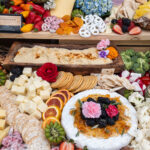
A grazing table is ideal when you want guests to explore. Artfully arranged cheeses, cured meats, seasonal fruit, dips, crisp vegetables, crackers, nuts, olives, and sweet details create a sense of all-out wonder. It is especially effective for cocktail hour, welcome parties, and late-night grazing.
The beauty is in the abundance, but abundance needs editing. Choose a cohesive palette and build contrast through texture: creamy cheeses beside crisp crackers, jewel-toned fruit against greenery, folded charcuterie beside rustic breads. A professional setup can make a generous spread feel elevated rather than crowded.
Curated Stations for a More Structured Reception
Stations work well for larger guest counts or receptions with a clear dinner plan. Consider a Mediterranean mezze display, an elevated crudité garden, a seafood-forward station, or a cheese and charcuterie moment paired with wine. A few focused displays can help guests navigate the room and reduce congestion around one central table.
This option also gives you room to honor family traditions or favorite travel memories. Just keep the menu easy to enjoy while standing. Anything that requires a knife, a complicated assembly, or both hands is less practical during a busy cocktail hour.
Dessert Displays That Feel Like a Finale
A wedding cake still deserves its moment, but it does not have to carry the entire dessert experience. Pair it with petite pastries, berries, macarons, chocolate-dipped fruit, cookies, or a colorful candy moment that reflects your wedding palette.
Dessert displays are particularly useful when dancing starts before cake cutting or when you want guests to graze at their own pace. Keep portions small and easy to take. The goal is delight, not a plate-balancing challenge in formalwear.
Use This Wedding Food Display Guide to Plan Quantities
The right amount of food depends on timing, guest count, and whether the display replaces a meal or simply opens the celebration. A cocktail-hour grazing display should feel plentiful without leaving guests too full for dinner. A display standing in for dinner needs more substantial components and a clearer service plan.
As a starting point, plan more generously when your event includes an open bar, a long gap between ceremony and dinner, or a guest list traveling from out of town. Guests tend to graze longer when they are reconnecting, taking photos, and waiting for the reception to begin.
A thoughtful mix includes familiar favorites and a few discovery bites. You might offer approachable cheeses alongside one or two bolder selections, classic salumi beside marinated vegetables, and abundant fruit for freshness. Vegetarian, vegan, gluten-free, nut-free, and dairy-free options should look intentional, not like an afterthought tucked into a corner.
For a larger wedding, replenishment matters as much as the opening presentation. A display that begins beautifully but looks picked over 30 minutes later loses some of its magic. Ask your caterer how they refresh boards, manage backup product, and maintain the visual balance as guests enjoy the food.
Design for Flow, Not Just Photos
A gorgeous display should photograph beautifully, but it also needs to work for a room full of hungry people. Place it where guests can approach from more than one side whenever possible. Avoid tight hallways, entrances, or the path between the bar and the dance floor.
If a table is against a wall, create enough depth for guests to reach without leaning across the entire arrangement. If it is freestanding, make all sides worth seeing. Vary height with risers, cake stands, wood boards, or low vessels, while keeping serving utensils accessible and stable.
The most successful food tables have a natural visual path. Guests should immediately see where plates and napkins are, understand where to begin, and find the most popular items without bottlenecking. Small signs can be helpful for dietary notes, but keep them discreet and in keeping with your event design.
Lighting deserves attention. Candlelight is romantic, but it can make a food display hard to enjoy or photograph. Work with your planner and venue to ensure the table has enough soft, flattering light. If the display is outdoors, schedule perishables thoughtfully around the warmest part of the day.
Keep Food Safety Part of the Luxury
There is nothing glamorous about melted cheese, wilted herbs, or food that has sat too long in the sun. Perishable items require temperature-conscious styling, especially at outdoor Southern California weddings. Shade, chilled serving surfaces, smaller replenished portions, and a trained setup team protect both the food and the guest experience.
Talk through the venue rules before finalizing your design. Some spaces require specific service equipment, limit open flames, or have rules about outside catering and cleanup. Clarifying these details early protects your timeline and prevents last-minute compromises.
The same care applies to allergens. Separate utensils, clear placement, and intentional ingredient choices help guests feel welcomed. A display can still look lush and artistic while making it easier for everyone to find something they can enjoy.
Let the Display Tell a Personal Story
The most striking wedding food displays are not copied from a photo. They reflect the couple. Maybe that means incorporating the citrus and stone fruit you love at your favorite California farmers market, serving a beloved family cookie, or building a late-night board around your first-date wine and favorite salty snacks.
You do not need to explain every detail to your guests. Personal touches work best when they feel natural. A handwritten-style label, a signature pairing, or a dessert inspired by a family recipe can be enough to make the table feel unmistakably yours.
At Your Grazing Table, we see food as part of the celebration design: a generous, artful welcome that gives guests something to gather around before the night unfolds. When the menu, styling, and service are considered together, the display becomes more than catering. It becomes one of the memories guests carry home.
Leave room for that little bit of surprise – the overflowing berries, the unexpected savory bite, the dessert guests photograph before they taste. Those are the details that turn a beautiful reception into a celebration that feels warmly, deliciously alive.